Top

Call us on (021) 425 0050

Vusubuntu Coalition

About the Coalition

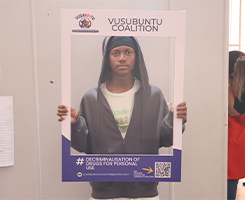
The Vusubuntu Coalition for the Decriminalisation of Drugs for Personal Use is a national, multi-sectoral movement working towards a South Africa that is safe, healthy and inclusive; a country whose response to drug use is rooted in compassion, evidence, health, human rights and social justice.

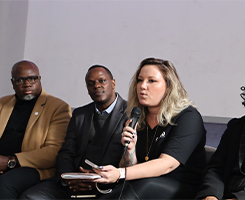
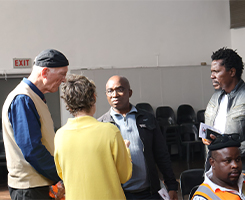
We bring together civil society organisations, legal experts, public health practitioners, faith and traditional leaders, community structures, and people who use drugs.

We are united by ten campaign values that hold together the dignity of the individual and the legitimate safety concerns of communities.
What we stand for

Ten campaign values guide everything we do.

Why now: the cost of criminalisation

For four decades, South Africa has treated personal drug use as a crime. That approach has not reduced drug use, drug markets, or the harms communities live with. Instead, it has filled courts, separated families, cost the state millions of rands, and pushed people who need help away from it.

162,100

Drug-related crimes recorded by SAPS in 2022/23 — overwhelmingly personal possession

72.1%

HIV prevalence among people who inject drugs in Tshwane

4 : 1

Possession arrests outnumber dealing arrests, by more than four to one

Enforcement falls hardest on lower-income and historically Black and Coloured communities. The honest question, after forty years of evidence, is whether criminalisation has delivered what we hoped, and whether there is a better way to reach the same goals.
What we are calling for

We are calling for the full decriminalisation of personal possession and use of drugs by adults accompanied by a responsible, properly resourced transition to a health-centred and community-supported response.

Decriminalisation is not legalisation

We are not asking for a commercial market or drugs on shop shelves. We are asking that personal use is met as a health and social matter, while the supply, trafficking and sale of drugs, especially to children, remain serious crimes.

Who we are

The Coalition is steered by organisations and community representatives working together for systemic reform, including:

The Coalition is governed through a Steering Committee, a broader Working Group and a Secretariat.

Your questions answered

It is the right question to ask. Where decriminalisation has been paired with investment in health services, as in Portugal since 2001, use among young people did not rise, problematic use fell, and HIV transmission dropped. Removing a criminal penalty is not approval. The message to young people stays the same: drug use carries real health, social and developmental risks.

No.

Legalisation creates a regulated commercial market, like alcohol. Under decriminalisation, drugs do not become legal commodities. It simply means personal use by adults is treated as a health matter rather than a crime. Supply and trafficking remain illegal and would be enforced more strictly, not less.

Children are best protected when parents can ask for help without fear of arrest, and when young people who experiment are supported through health and welfare rather than handed a criminal record. Selling or supplying drugs to minors stays a serious crime and freeing up police resources lets more focus fall on those who profit from it.

Violent and predatory crime is what people in South Africa are right to fear most. Personal-possession cases tie up enormous police and court capacity that could be focused there. Dealing, trafficking and supply to minors all remain crimes; we are asking for stricter, better-resourced enforcement of them.

This is the concern we take most seriously. Decriminalisation without investment in treatment and harm reduction would be irresponsible, which is exactly why we call for investment in harm reduction and social and legal support services for people who use drugs . South Africa already has proven, life-saving harm-reduction services; we are calling for the scale and the legal framework to reach everyone who needs them.

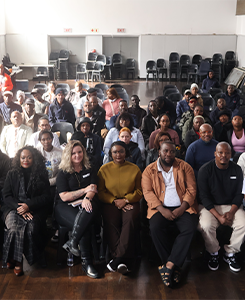
The Coalition was built in communities by people who live this issue, including people who use drugs, their families, allies frontline health workers, lawyers and faith leaders..

Get involved with Vusubuntu Coalition

This is a national conversation, and there is a place in it for you.

  • Become a member of the Coalition by expressing your interest or send us your questions at vusubuntucoalition@gmail.com.
  • Willing to be an active member of the Vusubuntu Coalition, sign up here:
  • Follow us on Facebook.
  • Share the campaign across social media channels.
Get Involved